

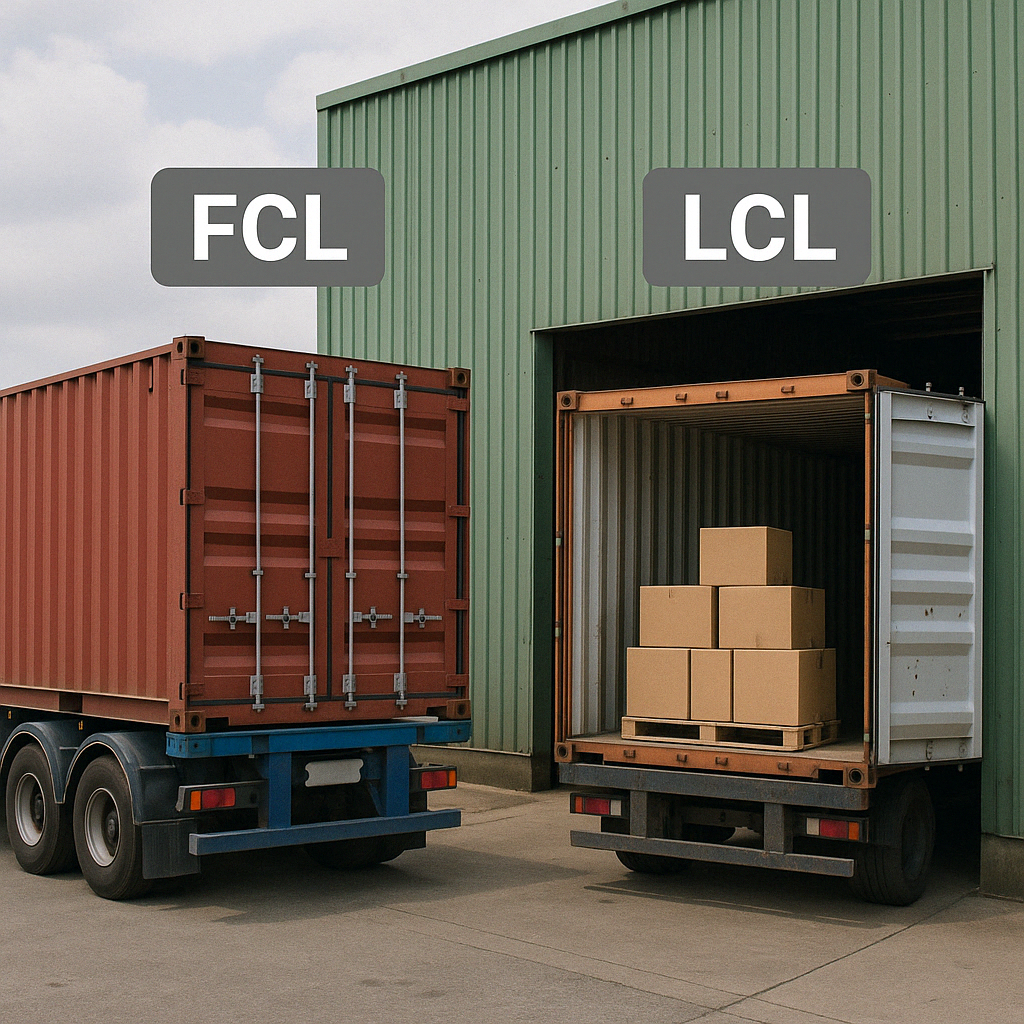
What Is FCL Shipping and What Are Its Advantages?
FCL (Full Container Load) refers to a shipping method where a client rents an entire container for their goods. This is particularly cost-effective for large shipments or cargo requiring special transportation conditions. A full container means that only your company uses the space, reducing the risk of damage and simplifying customs clearance.
FCL container shipping ensures a high level of security, as the container is sealed at the point of origin and not opened until it reaches the destination port. Additionally, FCL allows for accurate cost estimation and minimized delays.
This type of shipping is especially relevant for international freight, such as shipments from China, where product volumes are substantial. FCL is an ideal solution for companies that value control, safety, and fast logistics.
How Does LCL Work and When to Choose Consolidated Shipping?
LCL (Less than Container Load), or consolidated shipping, is a method used when the shipment volume doesn’t justify renting an entire container. In this case, the container is filled with goods from multiple shippers, which reduces shipping costs as they are shared among clients.
This shipping option is suitable for small shipments or when testing a new market. LCL shipments are carefully sorted, packed, and labeled to avoid confusion during unloading.
However, consolidated shipping may have drawbacks — such as longer delivery times due to cargo consolidation at ports and more complex customs procedures, as multiple bills of lading must be processed.
What’s the Difference Between FCL and LCL: Which Is More Cost-Effective?
The key difference between FCL and LCL lies in container usage. With FCL, you pay for the entire container regardless of how full it is. With LCL, you only pay for the space your cargo occupies. However, FCL may turn out to be more economical for large-volume shipments.
FCL also allows faster and simpler customs clearance, since there is only one shipper involved. LCL may be less predictable due to potential delays caused by other shippers’ cargo.
If your shipment exceeds half of a standard 20-foot container, FCL may be the better option in the long run, offering logistics cost savings, faster delivery, and fewer transportation expenses.s.
How to Choose Between FCL and LCL Based on Cargo Volume?
Cargo volume is a key factor when choosing the type of shipping. If your goods take up most of the container, or if they are heavy or bulky, FCL is the better choice. For example, if the volume exceeds 15 m³, FCL will likely be more cost-effective than LCL.
The type of product is also important: oversized cargo, equipment, or items requiring special storage conditions are best transported separately in a dedicated container. For small shipments like electronics or clothing, LCL is suitable.
Additionally, FCL is ideal for goods with strict customs requirements, as the container remains sealed during transit and the cargo doesn’t come into contact with goods from other companies.
What Are the Benefits of FCL Shipping for Businesses?
For companies that regularly import or export, FCL shipping offers reliability, confidentiality, and predictability. Since the container is used exclusively by one company, the risk of losses or delivery errors is reduced.
FCL also helps streamline logistics planning, which is critical for large retailers and manufacturers. Loading control, customs clearance, and cargo transportation are simplified thanks to using a single container.
Clients can ensure a high level of cargo service and increase product turnover, positively impacting their financial performance., downtime, or route changes. The insurance contract must clearly define the terms for damage compensation.
How Much Does FCL Cost: How Is FCL Freight Pricing Formed?
FCL freight cost depends on several factors: route, cargo volume, container type, delivery terms, and seasonality. Standard 20-, 40-, and 45-foot containers are the most commonly used for shipping.
Pricing also includes customs clearance, container loading, sea or road transportation, and port-related costs. The freight rate is calculated by the logistics company based on the shipping route.
For an accurate estimate, you can contact our experts for a full cost calculation tailored to your cargo’s specifics, volume, and dimensions.mpany also matters — different companies offer different rates, conditions, and additional services.
How Is Cargo Loaded and Transported in Containers?
Container loading is a crucial stage in FCL logistics. It includes space planning, proper cargo placement inside the container, and ensuring product safety during transit. Full container loading allows maximum space usage and minimizes cargo movement during shipping.
After loading, the container is sealed and sent to the port of departure. Transportation can be carried out by sea or truck. At the destination port, the container is unloaded, undergoes customs control, and is delivered to the consignee’s warehouse.
UAEL LLC offers full-service container logistics, including freight forwarding coordination, transportation arrangements, and door-to-door delivery.
What Documents Are Needed for FCL Freight Shipping?
Proper documentation is essential for FCL shipping to avoid delays or fines. Required documents include:
- Bill of Lading
- Commercial Invoice
- Packing List
- Quality Certificates (if needed)
- Customs documents
You also need ownership proof and export/import permits. For international shipments (e.g., from China), it’s important to consider INCOTERMS, which define responsibility for shipping, insurance, and delivery.
UAEL provides support at every stage of the shipping process — from document preparation to customs interaction — allowing clients to focus on their core business.
We work with both large corporations and small businesses, offering tailored solutions for every customer.
To order FCL shipping, simply contact a UAEL manager to get a free consultation and rate estimate for your cargo.