

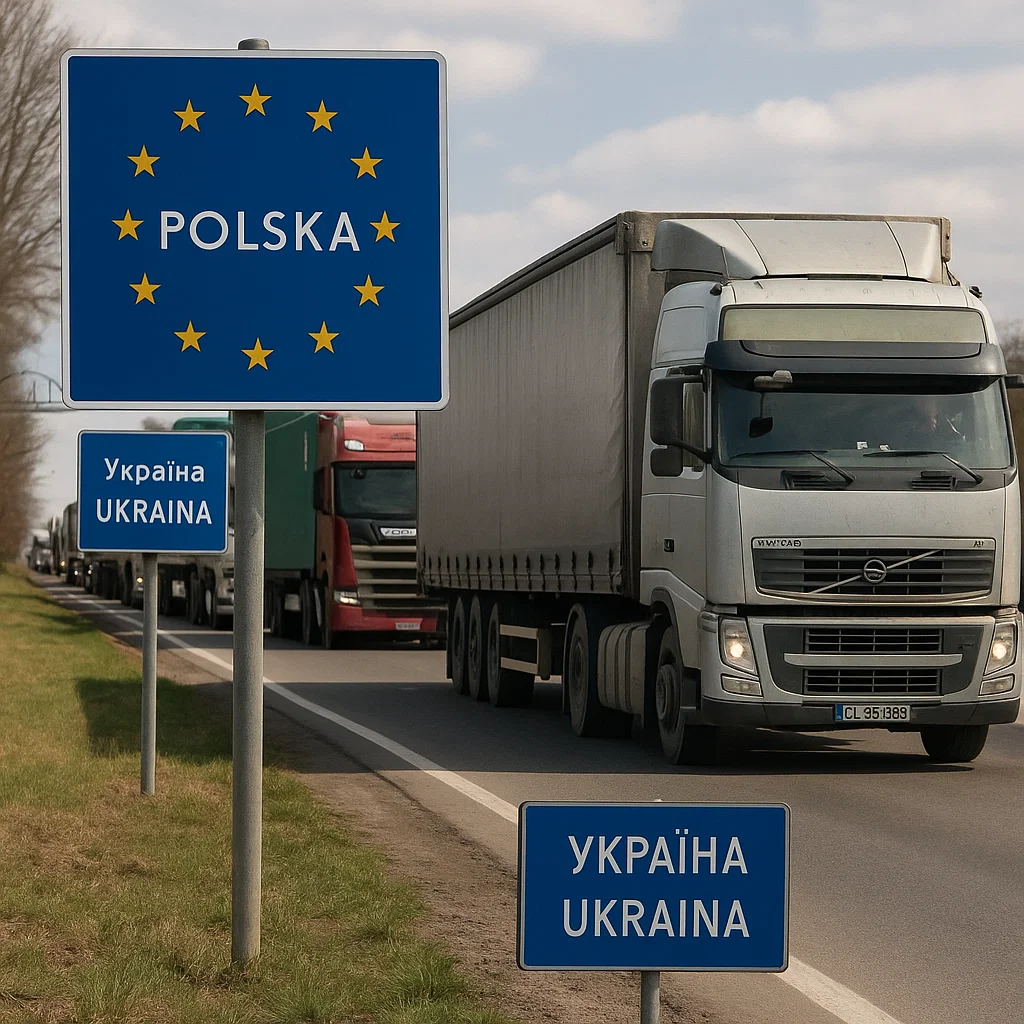
What is the trade visa-free regime and why is its cancellation important?
The trade visa-free agreement between Ukraine and the EU allowed for the removal of customs duties, quotas, and simplified customs procedures for most goods. It enabled thousands of Ukrainian companies to export their products to Europe quickly and profitably—especially critical during wartime when the economy needed stable support.
Starting June 5, customs duties and non-tariff barriers will be gradually reinstated. This means:
- Increased logistics and delivery costs;
- Customs delays due to bureaucratic procedures;
- Mandatory customs clearance even for small shipments;
- Return of certification and technical inspections.
What exactly will change in customs clearance after June 5?
Visa-free trade allowed companies to operate with a minimal set of documents. After its cancellation, the following will again be required:
- Customs declarations (EX, IM, T1);
- Certificates of origin (EUR.1 or others);
- Technical documentation and translations;
- Payment of duties and VAT in the country of import.
How will this impact logistics and exports from Ukraine?
This may have serious consequences for businesses:
- Longer delivery times: delays at the EU border will become the new normal;
- Higher costs: customs duties and additional document handling services will increase transportation expenses;
- More risks: higher chances of errors in paperwork, fines, or cargo detention;
- Increased load on logistics companies, who will now have to coordinate routes based on new tariffs and requirements.
This will particularly affect shipments to Poland, Germany, the Czech Republic, Slovakia, and the Baltic states—the main logistics hubs for Ukrainian exports.
❗ For example, delivery of generators, equipment, or agricultural products to Germany, Poland, or the Czech Republic will become 10–30% more expensive.
Who will be affected the most?
The impact will be most significant for businesses that regularly export:
- Electrical equipment (generators, inverters, transformers);
- Food products, grain, meat, dairy;
- Textiles, furniture, metals, spare parts.
What solutions does UAEL offer?
UAEL is your partner in the new logistics reality. We have already adapted our services to the new conditions and are ready to offer solutions to keep your business competitive even after June 5.
1. Full customs clearance
We handle all stages of customs support:
- Preparation of export declarations;
- Certification compliance control;
- Communication with EU customs;
- Minimizing the risk of delays and penalties.
2. Route optimization
Our logistics team plans routes with border changes, queues, and restrictions in mind. We choose the fastest checkpoints, work with trusted carriers, and guarantee on-time delivery.
3. Flexible pricing
Despite rising tariffs, we offer affordable logistics solutions:
- Road transport for small and medium-sized shipments;
- Multimodal transport (road + rail or sea);
- Competitive rates for regular deliveries.
4. 24/7 cargo tracking
We provide full transparency at every stage of delivery: you can see where your cargo is and receive updates on any status changes.
5. Cargo insurance
Given the new risks at the border, we recommend insurance that covers potential losses.
UAEL — More than just logistics
In wartime, we proved we could work quickly, safely, and transparently. Now, as the situation changes again, we are ready to face new challenges.