

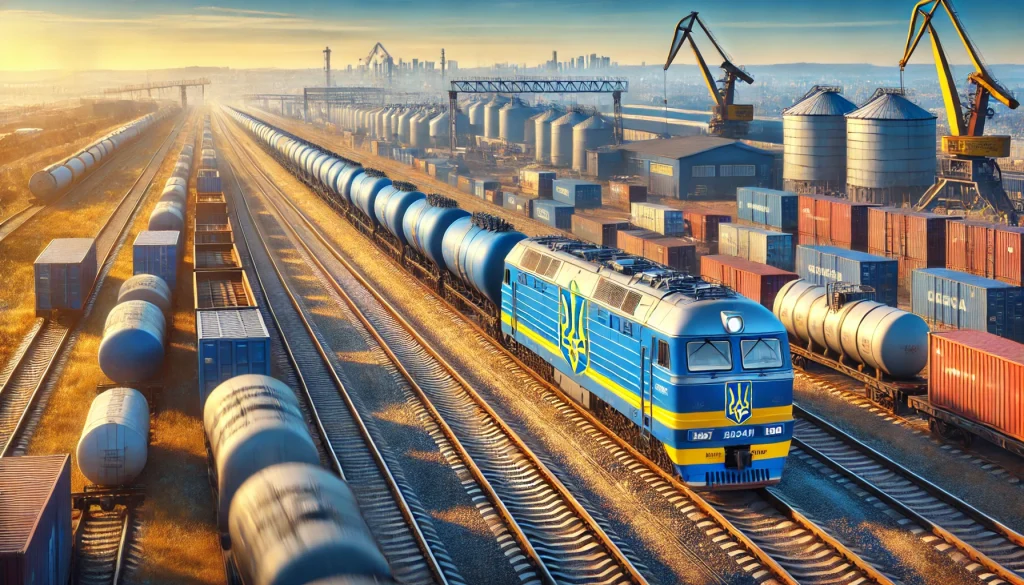
Rail freight transportation offers numerous advantages, with the key benefits being lower costs compared to air or road transport and independence from weather conditions. Traffic jams and road accidents, which often cause delays, do not affect rail routes. Moreover, rail transport allows for the simultaneous delivery of large shipments over long distances, making it an optimal choice for international transportation or long-haul domestic routes.
Our Transportation Routes
UAEL’s key focus is international rail freight transportation. Our company provides FCL (Full Container Load) and LCL (less than Container Load) shipments from China, Turkey, the USA, and the European Union. We organize international shipments of heavy and oversized cargo quickly and reliably to and from Ukraine thanks to efficient logistics. Additionally, we offer multimodal transport solutions that integrate other transportation modes, allowing us to tailor logistics to each client’s specific needs.
In cases where the final destination lacks railway infrastructure, we can still deliver your cargo by road transport. This solution enables full-cycle “door-to-door” transportation, covering all possible logistical challenges and customer needs within Ukraine.
As a result, UAEL provides a comprehensive logistics solution that includes all transportation stages—from route planning and customs clearance to final delivery.
Which Cargo Can Be Transported by Rail?
Rail freight transportation is suitable for a wide variety of cargo types, including hazardous, oversized, and heavy loads that require special handling conditions. Depending on the type of cargo, different railcar types are used, including covered wagons, containers, or open platforms, all of which meet the necessary safety and regulatory requirements.
How Is the Cost of Rail Freight Calculated?
The cost of rail freight transportation depends on several factors: route, cargo type, weight, and volume. Each order undergoes an individual pricing calculation to ensure the best balance between cost and service quality. Compared to other logistics services, rail freight transportation is more cost-effective, making it an economically viable option for businesses.
Key Stages of Rail Freight Transportation
Shipping goods by railway involves several key stages:
- Request Submission – Once you provide details about the cargo type, route, and delivery requirements, our specialist processes your request.
- Contract Signing – We formalize the transportation agreement.
- Route Planning – We develop the most efficient transportation route, optimizing transit time and cost.
- Carrier and Timeline Selection – We choose the appropriate railcars or containers for your cargo, assess transit timelines, and ensure safe delivery.
- Cost Calculation and Agreement – We finalize all transportation details, including the route, schedule, and pricing, before proceeding with shipment.
- Packaging and Documentation – We organize cargo packaging, sealing, and customs documentation.
Are International Rail Shipments Secure?
Security is a crucial factor in international freight transportation. Our clients can track their cargo from loading onto the train to final delivery, ensuring cargo safety. Additionally, we provide cargo insurance, which guarantees compensation in case of unforeseen circumstances. We also work exclusively with licensed carriers.
Rail transportation within Ukraine adheres to all possible safety regulations. However, due to the current wartime situation, there are still risks of cargo loss. At present, any transportation to or from Ukraine carries inherent risks.
Documentation for International Rail Freight Transportation
International rail freight shipments require a complete set of documents, depending on the cargo type, route, and transit countries. The key documents include:
- Rail Waybill (CIM) – The primary document for rail freight shipments, confirming the cargo transfer from the sender to the carrier. It contains information about the cargo type, route, delivery terms, and transportation cost.
- Customs Declaration – A mandatory document for crossing borders, ensuring legal cargo movement under customs regulations. It includes details about the cargo, its value, origin, and destination.
- Compliance Certificates – Some goods (e.g., hazardous or industrial products) require additional certificates confirming compliance with the import country’s standards.
- Licenses and Permits – If transporting hazardous or specialized cargo, your company may need additional government-issued permits and licenses.
- International Transportation Agreement – A contract between the transport company and the client that regulates mutual rights and obligations during rail freight transportation.
Proper documentation is crucial for avoiding border delays and additional inspection fees or penalties. UAEL specialists assist clients in preparing all necessary paperwork and overseeing the customs clearance process. We offer a full range of customs brokerage services.
Cargo Insurance for International Rail Freight Transportation
Cargo insurance is a vital part of international freight transportation, protecting clients’ interests against unforeseen circumstances such as damage, loss, or delays. Rail freight services should always include insurance, particularly for high-value goods or shipments requiring special storage and transportation conditions. Given the current situation, all cargo shipments within Ukraine must be insured.
UAEL insures all international and domestic shipments, covering risks throughout the entire transportation process. This service is included in the freight transportation cost.
The main types of cargo insurance include:
- Comprehensive Insurance (All-Risk) – Covers most risks that may occur during transportation, including accidents, natural disasters, or other unexpected events.
- Named Perils Insurance – Covers specific risks, such as fire or damage during loading and unloading.
- Total Loss Insurance – The minimum insurance coverage, compensating for total cargo loss due to catastrophe, railcar damage, or major accidents.
To book international rail freight transportation, submit your request today.