

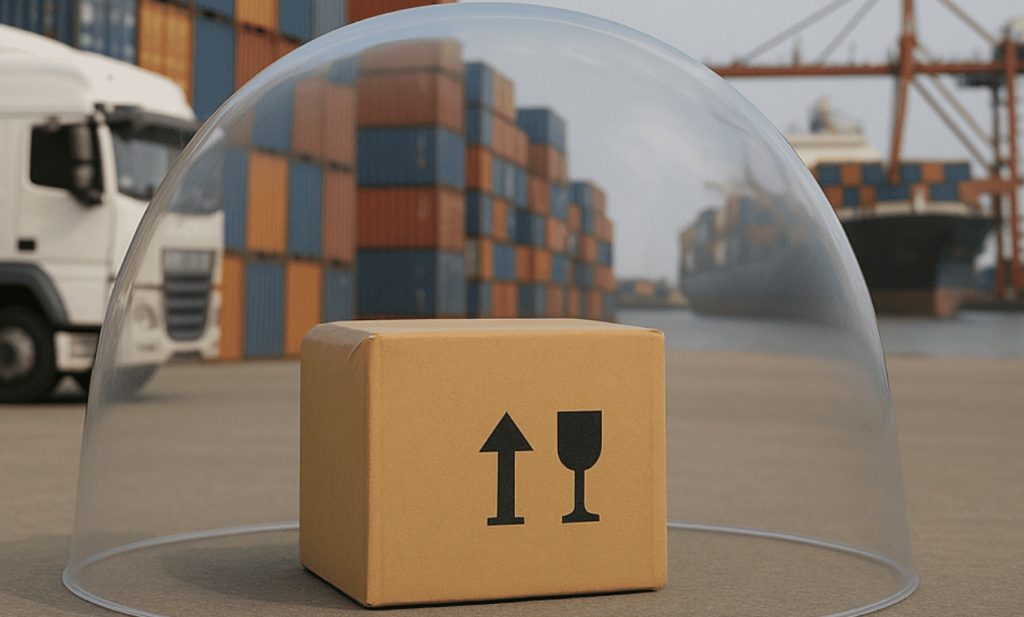
What is Cargo Insurance and Why is it Important?
Cargo insurance is a way to protect against financial losses in case of damage, loss, or total destruction of cargo during transportation. This type of protection is essential for large logistics companies, small businesses, and even individuals.
Cargo can be transported by road, sea, air, or rail, and each mode of transport carries its own risks. Collisions, accidents, vehicle breakdowns, shipwrecks, or even improper storage conditions can all result in losses.
Having insurance helps minimize financial losses and ensures compensation for valuable goods.
What Risks Does Cargo Insurance Cover During Transportation?
Cargo insurance typically covers a wide range of risks, including:
- Damage to cargo due to an accident or improper loading;
- Loss or theft during transportation or storage;
- Destruction of cargo due to natural disasters or fire;
- Delays or disappearance of cargo caused by the carrier or freight forwarder.
Insurance can also include coverage for expenses related to packaging damage, spoilage, or even customs detention. The insurance contract may offer various levels of protection depending on the transportation route, cargo type, and its value.
What Types of Insurance Policies Are Available for Cargo Transportation?
There are several main types of cargo insurance:
- Voluntary insurance, arranged by agreement between the client and the insurance company;
- Mandatory insurance, required by law for specific cargo categories or types of transportation;
- All-risk policies, which cover almost all incidents except specifically listed exclusions;
- Limited coverage insurance, which includes only specified risks, such as vehicle collisions or general average.
Cargo transported under CIF or FOB terms can also be insured according to shipping and freight rules.
How Is the Insurance Amount Determined and What Is Covered?
The insurance amount is the maximum sum the insurer agrees to pay in the event of an insurance claim. It is usually set based on the actual value of the cargo, and may also include additional costs like delivery, customs fees, freight, etc.
Insurance coverage may include:
- Product value;
- Loading, unloading, and storage expenses;
- Delivery to the final destination;
- Compensation for delays or changes in transportation conditions.
The choice of insurance policy depends on the nature of the cargo and the desired level of protection.
What Insurance Terms Should Be Considered?
Key insurance conditions include:
- Type of transport (land, sea, air);
- Transportation and storage time;
- Physical characteristics of the cargo (weight, fragility, packaging type);
- Transportation route, including transit countries;
- Carrier or freight forwarder liability.
It is also essential to consider whether the policy covers compensation for delays, downtime, or route changes. The insurance contract must clearly define the terms for damage compensation.
What Affects the Cost of Cargo Insurance?
Factors influencing insurance costs include:
- Type of cargo: valuable, perishable, hazardous;
- Chosen insurance amount;
- Transportation duration;
- Condition and type of transport;
- Route risk level (e.g., transit through high-crime areas);
- Storage conditions during the journey.
The insurance company also matters — different companies offer different rates, conditions, and additional services.
How Is a Cargo Insurance Contract Arranged?
The process begins with submitting an application to the insurance company, which includes:
- Type and quantity of goods;
- Loading time and transportation route;
- Cargo value and expected delivery date;
- Chosen insurance type.
Once terms are agreed upon, a formal insurance contract is drawn up, including:
- Full cargo description;
- List of covered risks;
- Insurance amount;
- Obligations of both insurer and policyholder;
- Procedures in case of a claim.
Who Is Responsible for Damage or Loss of Cargo?
Responsibility is determined by the contract terms and the role of each party. For example:
- Damage during transportation – the carrier or freight forwarder may be liable;
- Damage in storage – the storage facility owner is responsible;
- Accidents due to vehicle condition – the transport owner bears responsibility.
However, having an insurance policy allows for quicker resolution of disputes and compensation for losses.
What to Do in Case of an Insurance Event?
In case of cargo damage or loss, you should:
- Immediately notify the insurance company;
- Provide a damage or loss report;
- Submit documents confirming cargo value and the extent of the loss;
- Wait for a compensation decision.
Keep in mind, the insurer may deny payment if the policy terms were violated (e.g., improper packaging or non-compliance with transportation conditions).
What Are the Benefits of Cargo Insurance for Business?
The benefits of cargo insurance include:
- Protection from financial loss;
- Increased trust from clients and partners;
- Ability to continue operations even in case of catastrophic losses;
- Easier dispute resolution;
- Assurance of cargo safety during complex logistics operations.
All of this makes cargo insurance a strategically important element for modern business.
How Does the Logistics Company UAEL Operate?
UAEL does not directly provide insurance services but is responsible for the safety of cargo from the moment it is accepted for transportation until it is delivered to the consignee.
In international transportation, liability is determined by the CMR Convention, and for domestic shipments — by the Statute of Road Transport of Ukraine.
We insure cargo through insurance companies. UAEL is a reliable partner that collaborates with trusted insurance providers and offers tailored insurance solutions for each cargo request.